The Novice's Overview to Product Photography
If a image deserves a thousand words, a sensational product picture is worth a thousand web site check outs. Although I do not have information to back up that statement (yet), product photography can be incredibly beneficial to your ecommerce internet site method.
To reach your target market participants who like acquiring online, you likewise require to give your target market clear, captivating images of your products.
Yet product photography isn't as straightforward as directing and also firing. Also one of the most fundamental products need the proper tools, lights, as well as space to produce lovely pictures that offer buyers right from the purchase page.
6 Product Photography Tips ( as well as Instances) for Taking Pictures That Sell
Below are the tips, examples, and materials you'll need to efficiently photo https://sharedmoments.com.au/campaign-photography/ and also market your items in a way that makes your site visitors as well as leads want to convert.
1. Do not hesitate to utilize your mobile phone's cam.
This is the part where I'm supposed to convince you to purchase a high-end, 50-megapixel (MP) camera with a 100-millimeter screw-on lens. However I'm not mosting likely to do that.
If you currently own a video camera that fits this description, make the most of it. But also for lots of types of items, it's totally acceptable to shoot product pictures on a mobile phone.
More recent smartphones boast effective electronic camera lenses as well as settings that enable you to maximize your shots for the different types of light as well as environments you could shoot in.
If you require more convincing, simply take a look at Apple's Shot On An iPhone project and also the photos that have arised from it throughout the years such as this one:
2. Fire from a tripod for photo consistency.
Before clarifying tripods, I'm obligated to begin with a principal rule: Don't prop your phone versus something sturdy to aim your lens towards the topic.
It's just as well easy for this makeshift setup to move about during the shoot and also trigger inconsistencies in your pictures' appearance. If you relax your electronic camera on, say, a pile of publications, simply make certain this setup does not transform throughout the shoot.
There's no harm in holding your camera on your own when shooting simply a couple of product pictures for your ecommerce website. Yet as your service grows, and you take a lot more images of more products, it can be hard to standardize the product's alignment in each photo when firing handheld.
To guarantee consistency across your items, you'll need a tripod. As well as the good news is, buying one isn't always the large, industrial-sized investment it made use of to be.
Right here are two sorts of tripods to take into consideration.
Standard vs. Flexible
This is a tradition tripod-- there are typical tripods readily available for both cams and mobile phones.
A adaptable tripod can be controlled in a variety of methods. You can flex its legs and position it on various surface areas to get the angle you require.
Mobile Grasp
There's frequently a screw on the top of your tripod which connects to your cam to hold it in place. The bottom of the majority of professional-grade electronic cameras has a screw opening just for this objective, however smart devices can make use of the following adapter:
The adapter holds the sides of your smartphone and also can screw right into either sort of tripod, enabling you to run the electronic camera regulates with the phone display dealing with outside as well as towards you.
Once you determine which install you'll require, set it up in front of your product, and also think about putting 3 pieces of tape on the ground to mark where you wish to maintain each leg of your tripod throughout the shoot.
3. Select all-natural light or synthetic light.
Never ever underestimate exactly how certain sorts of light can improve (or hinder) your product photography. Bear in mind, buyers obtain the best check out an product in person, where they can see every little thing they need to before getting. The ideal illumination plan aids you expose those critical decision-making product attributes when all website visitors need to go on is a photo.
A solitary illumination setup might not work for every product-- a illumination setup that works for some items may weaken the appearance of others.
There are two sorts of light you can choose as your primary source of light: natural and also artificial light.
Natural Light
Natural light describes sunshine-- straightforward as that. It's also called "soft light" due to the fact that the sunlight casts a larger, softer variety of light than, claim, a light radiating directly on the product. Ecommerce product shots prosper in all-natural light if:
The product is shot outside or suggested to be utilized outside.
The product is made use of by, endured, or shot with a individual (people often tend to look much better in natural light).
You're trying to stress the product's environments, as opposed to particular qualities of the product.
Here's an example of a shot using all-natural light:
Fabricated Light
Artificial light includes candles, fire, and also extra frequently, light bulbs. It's likewise described as "hard light" because it generates a smaller however extra focused light surface area. This sort of light deals with items with physical information that require to be highlighted to thrill an on the internet shopper.
As a basic rule, adhere to just one sort of light per photo-- all-natural or fabricated. Adding all-natural light to an unnaturally lit photo can soften a product that's implied to look sharp, and including man-made light to a normally lit photo can develop a product that's suggested to look soft. You don't want to get in your own method.
4. Load or bounce your light to soften darkness.
Whether you utilize natural light or synthetic light, you'll require to decrease the darkness that any kind of potential hard light casts on the contrary end of a product.
There are 3 ways to do this:
Fill Light

Consist of one more, less-intense light to supplement your major light. This extra light is called your fill light as well as is utilized as a counterbalance to soften the natural shadow your major light generates behind an things.
To do this, position your fill light opposite your main light so your product rests in between both source of lights.
Flashbulb Bounce Card
A bounce card, or reflector card, is a tiny card that " mirrors" or " jumps" the main light back onto the surface under your product to lower darkness.
Some bounce cards connect to the flashbulb of a expert camera lens to diffuse the light from the electronic camera's flash. This card sprays a softer light onto the subject from over your collection-- instead of right at it-- so you do not have lengthy darkness trail behind the item you're firing.
Standalone Bounce Card
If you're shooting from a smartphone, a flashbulb bounce card isn't an choice, considering that you don't have a physical flash you can attach it to. Rather, make your very own standalone bounce card positioned contrary your main light source.
For novices to product photography, this bounce card can efficiently replace your fill light, which counters the hard light from the video camera flash or light that's dealing with toward the front of your product.
5. Make use of a sweep or portrait setting to stress the product.
There isn't one right way to place your product, lights, as well as jump cards-- they can transform considerably depending upon your background. However do not choose a background based upon what's most convenient to develop. Backgrounds need to resemble just how you desire your buyers to view your product when viewing it online.
Take into consideration first whether you would certainly like a white background or a extra dynamic, real-world history. There's an simple means to achieve every one.
White Background: Sweep
For white histories, it's not as basic as setting up a table versus white drywall. Even smart device video cameras can grab little blemishes on a white wall that you would not notice with the nude eye. To catch a perfect white background with no edges or imperfections, utilize a move.
A sweep is a large bendable sheet of paper, whose bottom serve as the surface under your product and afterwards contours up right into a white wall surface behind the product.
On electronic camera, the sweep's curve is unseen, highlighting key product details and also permitting the thing to have all of a web site visitor's attention.
Real-World History: Picture Mode
Dynamic, real-world histories are extremely appealing when capturing products that have a particular use or are being designed by a individual-- as you saw aware of the briefcase earlier in this guide.
However, it's simple for a real-world history to steal the emphasis of the photo, making it unclear which item in the photo you're really selling.
Provide your product depth and also emphasis with picture setting, a image setup on most specialist electronic cameras, and also available on several new smart devices. This setup obscures the history so the context of the product is clear but not competing against the product itself.
Below is a super amazing photo of a HubSpot pen absorbed picture setting on a Google Pixel 2 (I took this picture myself). You can tell the pen rests on a workdesk with a computer system behind it, however the pen is still the prime focus for viewers:
6. Fire a variety of pictures.
My last ecommerce photography suggestion to you is to not quit at one photo per product. Equally as your consumers look, hold, utilize, as well as also try on product in a shop, your internet site needs to shoot a range of photos to imitate this extremely experience.
If you're firing clothes, for example, record the garment of apparel alone-- that is, spread out on a white surface area-- along with on a mannequin whose color contrasts the color of the product.
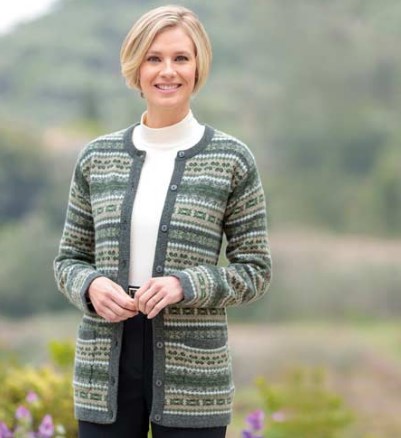
Then, for extra photos, have the apparel modeled on a individual, enabling you to take photos of the product from the person's various positions as well as angles.

Product Photography Set Up
Next off, allow's summarize what we simply received-- below's a list of quick product photography set-up tips that you can refer to and also share on your group:
• Choose a video camera-- whether that implies using your mobile phone.
• Get a tripod that benefits your camera of choice.
• Select all-natural or man-made lighting-- think about which option is best for your product and also atmosphere.
• Determine whether you'll load or bounce light.
• Select move or picture setting.
• Take numerous different photos to use your audiences range.
Start With Your Product Photography
Don't feel required to purchase every suggestion and tool at once. Use these product photography tips gradually to see what makes your shop look one of the most presentable, and alter your technique as your photography chops improve.